
When Fake Degrees Look Real: What a Recent Fake Certificate Scandal Reveals About the Limits of Document Checks

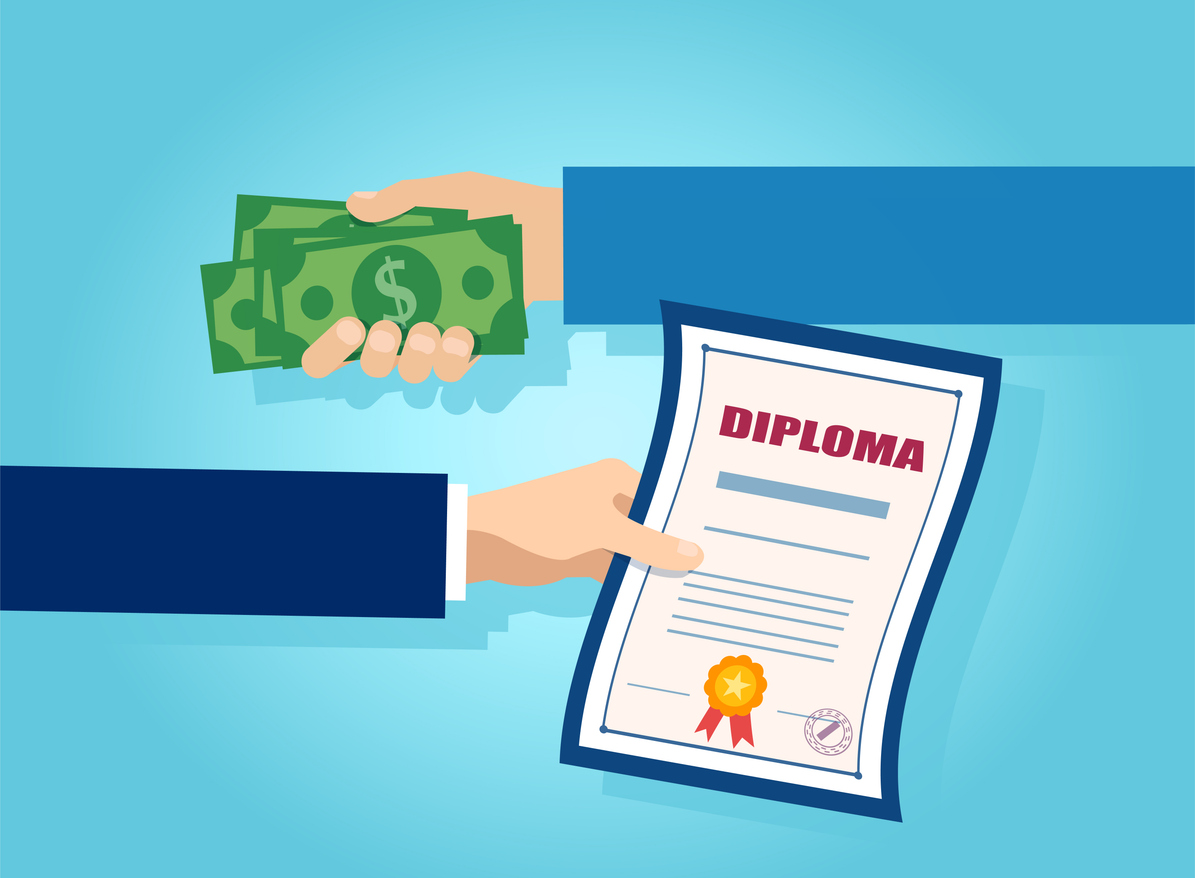
Recent reporting around the large-scale fake degree racket uncovered in India, and the subsequent political and regulatory response in Australia, has brought a longstanding issue in international admissions and compliance back into sharp focus.
This was not a case of crude forgeries or easily spotted errors. What authorities uncovered was a sophisticated, organised criminal network capable of producing academic certificates that closely resemble legitimate documents, complete with logos, seals, holograms and institutional formatting.
For universities, employers and regulators across the UK, Australia and beyond, the message is clear: document checks alone are no longer enough.
Contents
- The scale and sophistication of modern qualification fraud
- Primary source verification as a risk management strategy
- Maintaining public confidence in international education
- A global issue, not a local one
The scale and sophistication of modern qualification fraud
The scale of this operation matters. Investigators seized tens of thousands of fake certificates, with evidence suggesting many more may already be in circulation. These documents were not created for novelty purposes, they were designed to pass scrutiny and to be used for real outcomes: university admissions, employment, professional registration and immigration.
Crucially, these were not isolated incidents. Organised fraud networks operate across borders, share production techniques and adapt quickly to new controls. This creates an uncomfortable reality for admissions and compliance teams: experience and intuition, while valuable, are no longer reliable safeguards on their own.
Why even the best in-house checks can fail
Many institutions invest heavily in training their teams to spot inconsistencies in transcripts, certificates and supporting documents. This remains important, but it has a limit.
When a document has been produced using insider knowledge of institutional formats, or replicated from genuine historical examples, there may be nothing visibly wrong with it at all. At that point, the question is no longer does this look genuine? but is this genuine?
The only way to answer that question with confidence is primary source verification, confirming the qualification directly with the awarding institution or trusted source. Anything short of that leaves an unavoidable gap.
Primary source verification as a risk management strategy
Primary source verification also shifts the focus from detection to prevention.
Instead of trying to outsmart increasingly sophisticated fraud, institutions can rely on confirmation from the source that matters most, the awarding body itself. This approach removes subjectivity, reduces institutional risk and provides a defensible audit trail for compliance purposes.
For UK and Australian universities operating under intense regulatory scrutiny, particularly around international admissions, this is becoming less of a best practice and more of a baseline expectation.
Why scale and insight matter
While primary verification is essential, doing it efficiently and consistently is not trivial.
Qualification Check works with tens of thousands of trusted sources across nearly every country, allowing universities to access economies of scale that are impossible to achieve inhouse. Beyond speed and coverage, this scale creates something equally valuable: real-time insight into emerging fraud patterns and risk hotspots.
Maintaining public confidence in international education
When verification is handled centrally and at volume, trends become visible earlier. Institutions benefit not just from individual checks, but from collective intelligence shaped by the wider sector.
International students deliver well-established academic, cultural and economic benefits to the UK, Australia and other major study destinations. Universities rightly advocate for these benefits and for the value of open, globally engaged education systems.
However, recent reactions from Australian politicians following the exposure of the fake degree racket in India underline how quickly qualification fraud can become a matter of public and political scrutiny. Even when such cases represent a small minority of applicants, they can be used to question the integrity of international admissions systems more broadly.
This is not a challenge that can be addressed through messaging alone. In environments where international education is closely examined by regulators, policymakers and the media, institutions need to be able to demonstrate that growth in international recruitment is matched by robust, credible controls.
In that context, global primary verification is more than an operational safeguard, it is a reputational one. It allows institutions to respond to scrutiny with evidence rather than reassurance, showing that all applicant’s qualifications have been independently confirmed at source.
This approach protects genuine students, supports compliant institutions and strengthens the sector’s ability to stand behind the benefits of international education with confidence. The most sustainable defence against external criticism is not rhetoric; it is a robust, verifiable process.
A global issue, not a local one
Although recent headlines have focused on India and Australia, qualification fraud is a global challenge. As international recruitment continues to grow and applicant volumes increase, the incentives for organised fraud grow alongside it.
Institutions that rely on surface level checks expose themselves to reputational, regulatory and operational risk. Those that embed primary verification into their admissions and compliance workflows are better positioned to protect their students, staff and institutional credibility.
Stay informed
Fraud techniques evolve quickly. Staying ahead requires timely, reliable insight into what is happening across the sector.
Sign up to the Qualification Check Fraud Bulletin to stay informed and protect your institution.

Recent Articles

The cost of doing nothing: what is qualification verification worth to your university?

Rising student visa refusals raise the stakes for pre-CAS verification

The Hidden Complexity of Verifying International Qualifications


Student Finance Fraud: Why Universities Need to Verify More Than Qualifications

Why Applicant Support Matters in Qualification Verification