QCHE 2026: Strengthening Assurance in a Changing Admissions Landscape


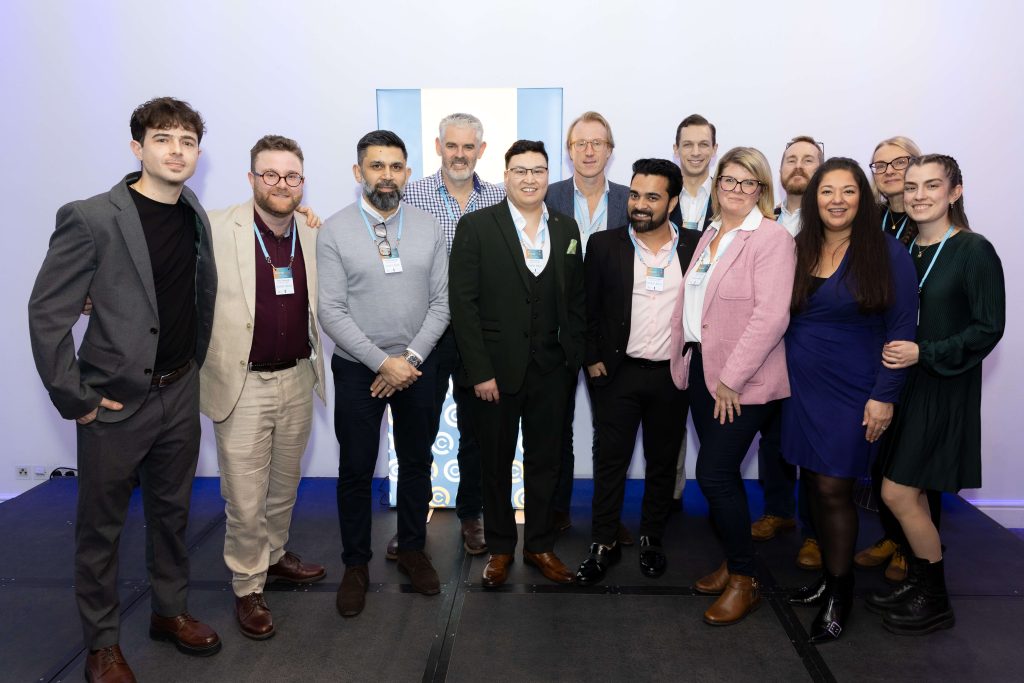
On Wednesday 11 February 2026, Qualification Check welcomed 80 delegates from 40 universities to Glaziers Hall, London Bridge, for the second annual QCHE conference. Held in partnership with Password English Language Testing, the event brought together admissions, compliance and sector leaders for a focused day exploring risk, fraud and assurance in an increasingly complex admissions environment.
Across platform updates, collaborative masterclasses and two expert panels, one message remained consistent: institutions are evolving rapidly in response to rising fraud sophistication, shifting regulatory expectations and growing operational pressure.
Contents
Gallery







Discussions from the day
Building Assurance into the Admissions Journey
The day opened with a focus on why convening the sector matters now. Ed Hall, CEO of Qualification Check, set the context by outlining the regulatory, reputational and operational pressures shaping global admissions.
This was followed by Evolving Together: Platform Updates and the Road Ahead, delivered by Qualification Check’s Nick Foote, CTO, and Rachel Whales, Head of Global Accounts. The session explored recent platform enhancements, how partners are using them in practice and how institutional feedback is shaping future development.
Discussions throughout the morning highlighted how informal or manual processes are increasingly being replaced by structured, auditable controls. Institutions are strengthening identity and English language checks, and adopting risk-based insights that surface discrepancies early, from minor data mismatches to more serious fraud indicators.
Crucially, verification is no longer seen as a back-office function. With enhanced analytics, real-time dashboards and clearer workflow visibility, verification data is becoming a strategic asset, informing recruitment planning, risk profiling and policy refinement.
Qualification Check’s roadmap, referenced during the platform session, includes deeper system integration, lighter-touch APIs and a redesigned applicant experience focused on clarity, accessibility and reducing friction in the student journey. The direction of travel reflects a shared sector priority: assurance and efficiency must work together.
Verification Masterclass: Insights from Data and Practice
A major focus of the morning was the Verification Masterclass led by Qualification Check’s Phil Dupont, Head of Business Solutions, alongside Abhishek Dubey, Head of Service Delivery.
In Part One, Phil shared newly analysed Qualification Check data on fraud patterns in international verification, while Abhishek provided operational insight from the verification teams he leads, including real-world examples of document fraud and credibility manipulation encountered in practice. Among the many insights shared, real-time Qualification Check platform data shows that fraud spikes as admissions deadlines loom, and that fraud rates on undergraduate checks were considerably higher than postgraduate checks in 2025, at 6.65% and 2.39% respectively.
Following a short refreshment break, Part Two moved into interactive group work, with attendees working in small groups to examine shared challenges in international admissions, verification and compliance.
Shared Challenges Across the Sector
Discussions surfaced some of the most pressing issues currently facing institutions:
- Credibility assessments and identifying genuine students where no obvious red flags exist
- Fake offer letters exploiting institutional brands
- Academic Technology Approval Scheme, ATAS, certificate delays and limited process transparency
- Visa delays and refusals, particularly in higher-risk markets
- Medium of Instruction verification and English language equivalency
- The expanding breadth and complexity of global qualifications
A clear pattern emerged: institutions are operating in a high-risk environment with limited visibility over elements of the process that sit partially outside their control. Yet the accountability and regulatory consequences rest firmly with admissions and compliance teams.
Technology featured prominently in the discussion, both as an enabler of fraud and as part of the solution. While AI and digital tools can facilitate misconduct, they also support pattern recognition, automated risk scoring and more consistent decision-making frameworks.
Policy, Metrics and Compliance
The first afternoon panel, Policy, Metrics, and Compliance: Navigating 2026, brought together Andreea Moga, QAHE, Amanda Jeram, Bloomsbury Institute London, Fiona Guernaoui, University of Law, and Shelley Vink, Password.
Panellists examined BCA metrics and the UK’s International Education Strategy, and how evolving sponsor requirements are shaping expectations for international admissions. Institutions shared how they are adapting credibility processes, strengthening documentation and ensuring decisions are defensible under audit scrutiny.
Measures discussed during the day included systematic qualification verification, structured pre-CAS engagement, enhanced financial checks, market-specific risk approaches and diversification strategies to reduce exposure.
A key theme was agility. Institutions are analysing refusal letters intake by intake, refining questions and adjusting thresholds in near real time. Being audit ready by design, with clear documentation trails to justify every CAS decision, is increasingly seen as essential.
Countering Application Fraud
The second panel, Countering Application Fraud: Lessons from the Sector, featured Ed Hall alongside Maeve Huttly, King’s College London, Fiona Eccles, University of Manchester, and James Herron, University of Westminster.
The discussion reflected on how fraud has evolved from isolated document tampering to coordinated networks, proxy test takers and high-quality fabricated credentials. Several institutions reported a deterrent effect following the introduction of verification with Qualification Check, with fraudulent applicants withdrawing earlier in the cycle.
Key themes included early verification to protect conversion, the growing exposure within undergraduate recruitment, the importance of cross-sector intelligence sharing and the need to balance fraud detection with a fair applicant experience.
English Language Testing: Looking Beyond the Score
The final session, Beyond the Score: Managing Fraud, Misconduct and Risk in English Language Assessment, was led by Password’s Shelley Vink and Molly Tuttle.
The workshop explored risks including proxy test takers, AI-generated writing, remote access tools and other emerging technologies. Delegates also discussed the subtler challenge of students achieving required test scores without developing genuine language proficiency, leading to difficulties post-enrolment.
The session emphasised the importance of layered controls, clear evidence trails and transparency in protecting both institutional integrity and student outcomes.
A Collective Response to a Changing Landscape
QCHE 2026 demonstrated that while admissions processes are becoming more complex and more scrutinised, institutions are responding with stronger controls, better data and greater collaboration.
Efficiency and assurance are no longer trade-offs. With the right systems, processes and shared insight, they can reinforce one another.
The sector is evolving with technology, and it is doing so collectively.
Recent Articles
QCHE Awards 2026 winners: Celebrating excellence in verification and compliance practice

How to stop admissions fraud (AUS & NZ)


QCHE 2026: Strengthening Assurance in a Changing Admissions Landscape

When Fake Degrees Look Real: What a Recent Fake Certificate Scandal Reveals About the Limits of Document Checks


Raise a toast: Awards ceremony nominations revealed for QCHE 2026