
How to recruit students from anywhere: A guide for universities


International students play a vital role in enriching academic life, advancing research, supporting university finances, and enhancing the UK’s reputation as a leading destination for higher education. However, recent policy changes, increased compliance requirements, and concerns about fraud have led many universities to reduce recruitment from key international markets.
This has been further heightened by the UK government’s announcement that it would stop issuing study visas from Afghanistan, Cameroon, Myanmar and Sudan due to ‘abuse’ of the study visa system from March 2026.
While caution is understandable, withdrawing from international recruitment does not have to be this way. A robust recruitment strategy, supported by effective verification tools, enables universities to recruit confidently from any market.
Table of contents
How many international students are there in the UK?
Why are universities concerned about recruiting new students from some international markets?
What does it mean for a university when they limit their recruitment talent pool?
How can universities recruit students from all international markets with confidence?
How many international students are there in the UK?
In 2024/25, 685,565 international students were enrolled, accounting for 23.9% of all students. This is a decrease from the 2022/23 peak of 758,855, which had grown steadily for over a decade.
International students contribute significantly to UK universities. In 2023/24, their tuition fees totalled approximately £12 billion, representing over 23% of total university income. In 2021/22, they generated a net benefit of £41.9 billion to the UK economy.
The UK is the second most popular destination for international students after the United States, with India, China, and Nigeria as the leading source countries. Shifts in government policy and global competition have made it more challenging for universities to maintain international student numbers. As noted by Universities UK International, the sector faces a critical juncture in its recruitment efforts.
Why are universities concerned about recruiting new students from some international markets?
There are legitimate concerns about recruiting from some international markets. However, understanding exactly where the risk lies, and where it does not, is crucial before scaling back international recruitment activity.
Greater regulation and scrutiny
The government has introduced a series of policy changes that have reshaped the international student recruitment landscape in the UK. In January 2024, it restricted the right of international students on taught postgraduate courses to bring family dependants, a move that led to an 85% reduction in student dependant visas within a year. Meanwhile, ongoing reviews of the Graduate Route visa have created uncertainty for prospective students trying to plan their futures.
As The PIE News notes, the UK’s policy environment has become considerably more complex. Institutions are navigating a landscape where compliance demands are tightening even as student numbers decline, resulting in a recruitment culture that has become more cautious than creative.
Stricter consequences
Universities that breach their UKVI sponsorship duties are at greater risk of facing serious consequences.
This includes being placed on formal UKVI action plans, sponsor licences suspended and in the most serious cases, losing their place to enrol international students entirely.
More recently, there have also been reports of a proposed RAG (Red, Amber, Green) rating system for basic compliance assessment metrics. Essentially, this would mean rating universities based on their compliance performance, introducing an additional reputational risk for institutions that fail to meet international recruitment standards.
Common triggers for action plans include students not arriving after receiving a Confirmation of Acceptance for Studies (CAS), absconding, or failing to complete their course. These issues often result from misrepresented academic backgrounds, English proficiency, or financial circumstances, which can be mitigated through thorough due diligence during recruitment and admissions.
Genuine Risk of Fraudulent Applications
Fraudulent applications are a documented and increasing challenge in higher education. After the rise in international student numbers from 2019 to 2022, universities experienced more fraudulent applications, especially from India, Pakistan, Bangladesh, and Nigeria.
UKVI has found that many students who do not complete their courses misrepresented their English proficiency, academic backgrounds, or financial stability. This presents a challenge of admissions integrity beyond immigration compliance.
Our 2025 International Admissions Fraud Report explored the top markets where fraudulent applications occurred.
What does it mean for a university when they limit their recruitment talent pool?
Given these pressures, universities may be inclined to focus on established markets and avoid higher-risk regions. However, this approach carries significant costs for institutions, students, campuses, and the broader UK higher education sector.
Firstly, it’s unfair for the student
Most international applicants are genuine, motivated individuals seeking opportunities at UK institutions. Blanket restrictions on certain markets unfairly penalisze legitimate students due to the actions of a small minority.
Advance HE notes that regulatory pressures can hinder the development of student-centred recruitment strategies. Avoiding certain markets may deny deserving students access to UK education, which is neither a proportionate nor fair response to risk.
You’re limiting the recruitment of highly talented students
Some of the world’s most talented students come from the very markets that UK universities are becoming most cautious about. Nigeria, India, Pakistan, Bangladesh, and Nepal are all markets that have seen significant scrutiny, but they are also home to extraordinary academic talent. Countries like France and Germany have already recognised this, aggressively expanding their English-taught programmes and making themselves more attractive destinations.
As Wonkhe’s analysis of the changing international recruitment market notes, students are now more informed than ever, weighing graduate salaries, post-study work options, and the political climate across multiple destinations before deciding where to apply.
If UK universities withdraw from these markets, they risk losing not only short-term fee income but also long-term alumni relationships, research partnerships, and global influence.
How can universities recruit students from all international markets with confidence?
The solution is not to withdraw, but to recruit more intelligently. While international recruitment risks exist, they can be managed. With an effective verification framework, universities can confidently admit students from any market.
Qualification Check is designed to provide this assurance.
Primary Source Global Verification
Qualification Check’s core service for higher education is Global Verification, a primary source verification solution that confirms qualifications directly with issuing institutions or awarding bodies. With access to over 55,000 trusted sources in more than 195 countries and 20 languages, Global Verification delivers fast, accurate confirmation of academic and professional credentials from nearly any market.
For universities managing compliance risk, this approach is transformative. Admissions teams can verify qualifications, grades, and attendance directly at the source, rather than relying solely on applicant-provided documents.
Qualification Check’s Global Verification Admissions Plus combines four essential verifications into one streamlined process: digital identity check, academic qualification verification, secure English language proficiency check, and academic reference. This ensures applicants meet national student migration requirements and reduces the risk of UKVI compliance issues.
Digital Identity Verification
Verifying qualifications is only one aspect. With an estimated 9 million identities stolen each year globally, and passports or driving licences no longer sufficient for international recruitment, universities must ensure they can accurately confirm applicant identities.
Qualification Check’s Digital Identity Verification (DIDV) uses a three-step process to ensure document authenticity. By combining document authentication, biometric verification, and database cross-referencing, DIDV enables universities to confirm applicant identities and eliminate identity fraud risk in admissions.
Primary source verification and digital identity verification address the two main gaps in international admissions. Universities using both can confidently recruit from any market, knowing each student has been thoroughly verified at the source.
In Summary
International student recruitment faces real pressures, including increased regulatory scrutiny, stricter visa rules, compliance risks, and concerns about fraud. These challenges must be addressed, but should not deter universities from recruiting international students who are vital to their future.
With nearly 686,000 international students in the UK and international fees comprising almost a quarter of sector income, the stakes are high. The talent, diversity, and potential international students bring are irreplaceable.
A confident international recruitment strategy involves managing risk intelligently. With Qualification Check’s Global Verification and Digital Identity Verification tools, universities can recruit globally, verify applicants at source, and admit students with full confidence in their identity and qualifications. While regulatory challenges remain, the right tools ensure they do not impede progress.

Recent Articles

Ghent shares admissions verification lessons at Belgian university roundtable


The cost of doing nothing: what is qualification verification worth to your university?

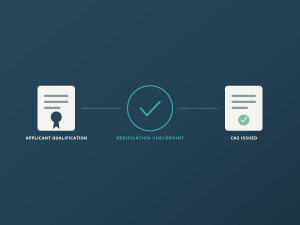
Rising student visa refusals raise the stakes for pre-CAS verification

The Hidden Complexity of Verifying International Qualifications


Student Finance Fraud: Why Universities Need to Verify More Than Qualifications