
How education agents can reduce fraud and improve international application quality

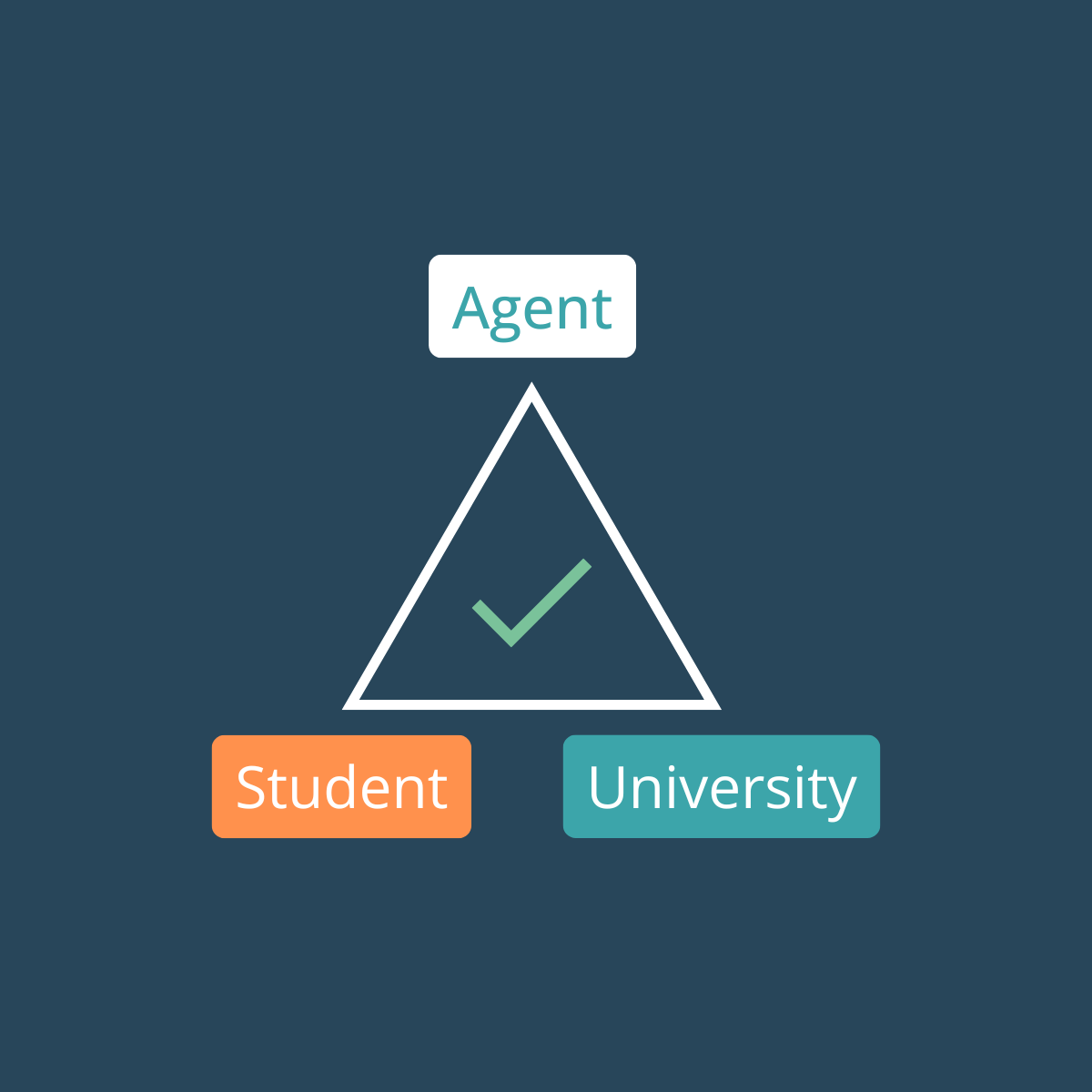
International student recruitment is becoming more complex.
Universities face growing pressure to strengthen compliance, detect fraud earlier, and ensure international admissions processes can withstand increasing regulatory scrutiny. At the same time, education agents are expected to deliver applications quickly, accurately, and at scale.
That creates a difficult balancing act. Agents need to manage high volumes of student applications while navigating changing visa requirements, evolving admissions criteria, and increasingly sophisticated forms of fraud, including AI-generated documents and manipulated academic records.
For many international recruitment teams, manual document checking and fragmented workflows are no longer sustainable.
Qualification Check helps education agents streamline application verification, reduce fraud risk, and improve application quality through source verification, identity checking, and centralised applicant management tools.
The growing pressure on international education agents
Education agents play a critical role in global student mobility. Universities rely on trusted recruitment partners to identify qualified applicants, support students through the admissions process, and help expand international enrolment pipelines.
However, expectations placed on agents have changed significantly in recent years.
Universities are increasingly scrutinising application quality, document authenticity, and recruitment practices. Governments across major study destinations have also introduced tighter compliance expectations surrounding international student recruitment and visa sponsorship. At the same time, fraud methods are becoming more advanced.
Initiativess such as the UK Agent Quality Framework (AQF) reflect the sector’s increasing focus on transparency, ethical recruitment practices, and stronger oversight across international student recruitment networks.
As universities place greater emphasis on agent quality and application integrity, recruitment partners are under growing pressure to demonstrate consistent standards, reliable processes, and trusted verification practices.
Admissions teams and recruitment partners are encountering:
- forged academic certificates,
- manipulated transcripts,
- fake translations,
- identity inconsistencies,
- AI-generated documentation,
- and fabricated application histories.
For education agents, maintaining trust with university partners now depends heavily on the ability to identify and prevent these risks before applications are submitted.
Why manual application processes create risk
Many education agents still rely on disconnected systems, email-heavy workflows, spreadsheets, and manual document reviews to manage student applications.
As application volumes increase, these processes become difficult to scale efficiently.
Manual verification introduces several operational challenges:
- slower turnaround times,
- inconsistent document reviews,
- increased risk of human error,
- difficulty tracking applicant progress,
- and limited visibility across teams.
At the same time, sophisticated fraud is becoming harder to detect through visual inspection alone.
This creates pressure for agents to balance speed with accuracy, while continuing to meet the expectations of both students and university partners.
How Qualification Check supports education agents
Qualification Check helps education agents strengthen application integrity while improving operational efficiency across the admissions journey.
Our platform combines source verification, identity checking, and workflow management tools to help agents process applications with greater confidence and consistency.
1. Verify qualifications directly with awarding institutions
Qualification Check connects with more than 55,000 academic institutions across 195+ countries to verify academic records directly at the source, processing hundreds of thousands of checks per annum.
Rather than relying solely on uploaded PDFs or scanned copies, agents can validate:
- transcripts,
- certificates,
- graduation outcomes,
- and awarding institution records.
This helps reduce the risk of fraudulent submissions while giving university partners greater confidence in the authenticity of applicant data.
2. Deter fraudulent applicants earlier in the process
Visible verification processes can act as a strong deterrent against fraudulent applications.
Applicants using falsified documentation are significantly less likely to proceed when they know credentials and identities will be independently verified.
At the 2026 QCHE Conference, Fiona Eccles from the University of Manchester described Qualification Check as an “immediate deterrent” against fraudulent applications.
By filtering out high-risk submissions earlier, education agents can focus more time on genuine applicants with strong potential for successful placement.
3. Improve trust with university partners
Application quality has become a major differentiator for education agents.
Universities increasingly value recruitment partners that consistently submit complete, verified, and compliant applications.
By embedding verification into the admissions workflow, agents can demonstrate a clear commitment to quality assurance, compliance, and ethical recruitment practices.
This helps strengthen long-term institutional relationships and protects agent reputation in a highly competitive market.
4. Reduce manual administration and improve efficiency
Qualification Check helps education agents move away from fragmented manual processes.
By digitising verification workflows and centralising applicant data, teams can reduce administrative overhead and accelerate turnaround times across the application cycle.
This allows recruitment teams to spend less time chasing paperwork and more time supporting students and growing partnerships.
5. Manage all student applications in one place with the Qualification Check Agent Portal
To further support education agents, Qualification Check has launched a dedicated Agent Portal designed to simplify the management of international student applications.
The portal gives agents a single centralised workspace where they can:
- manage multiple student applications,
- track verification progress,
- and collaborate more efficiently across teams.
Rather than managing applications across disconnected email chains and spreadsheets, agents gain clear visibility across their entire recruitment pipeline in one place.
The Agent Portal is designed to help education agents:
- improve operational efficiency,
- reduce administrative delays,
- maintain better oversight of applicant progress,
- and provide a smoother experience for both students and university partners.
Faster verification, clearer workflows, and earlier identification of missing or problematic documentation can also improve the student experience. Genuine applicants benefit from quicker decisions, reduced uncertainty, and a more streamlined admissions journey overall.
As international admissions processes become more complex, centralised workflow management is becoming increasingly important for scalable, compliant recruitment operations.
Supporting universities and their global agent networks
Qualification Check works directly with education agents, but we also partner with universities looking to strengthen oversight, consistency, and trust across their international recruitment networks.
Through the Qualification Check platform, universities can onboard and support their approved education agents within a shared verification and application management environment.
This creates several advantages for both institutions and recruitment partners.
For universities, it provides:
- greater visibility across agent-submitted applications,
- more consistent verification standards,
- improved transparency throughout the admissions process,
- and stronger confidence in application authenticity and quality.
For education agents, access to Qualification Check tools helps streamline workflows, improve document quality, and accelerate the submission of verified applications.
By giving agents access to verification and applicant management tools directly within the platform, universities can help recruitment partners operate more efficiently while improving trust and collaboration across the wider admissions ecosystem.
Importantly, this approach also supports student conversion.
When applications are more complete, better organised, and verified earlier in the process, admissions teams can make decisions faster and with greater confidence, helping genuine students progress through the recruitment journey more smoothly.
Supporting compliant and sustainable international recruitment
The international admissions landscape continues to evolve rapidly.
Education agents are under growing pressure to deliver trusted applications while adapting to changing compliance requirements, rising fraud risks, and increasing operational demands.
Verification technology is becoming an essential part of modern international recruitment infrastructure.
By combining source verification, identity checking, and streamlined applicant management tools, Qualification Check helps education agents improve application quality, reduce risk, and strengthen trust with university partners worldwide.
Recent Articles

CBSE verification update: supporting universities through continued disruption


How education agents can reduce fraud and improve international application quality

How to recruit students from anywhere: A guide for universities


The risks of manual verification processes

QCHE Awards 2026 winners: Celebrating excellence in verification and compliance practice