
The Hidden Complexity of Verifying International Qualifications

For a university admissions team, verifying an international qualification can sound relatively straightforward: identify the awarding institution, access its records and confirm that the qualification is genuine.
In practice, the reality is considerably more complicated.
Universities recruit from across the world, but the systems used to verify qualifications have rarely been designed with international admissions teams in mind. Some awarding bodies provide online verification portals, while others rely on direct correspondence or institution-specific processes. Some systems restrict access according to geography, meaning a portal that is readily available in the country where a qualification was issued may not be accessible to a university team working elsewhere.
That can leave admissions and compliance teams with a practical problem: how do you complete a robust verification when you cannot easily access the source?
When access becomes part of the verification challenge
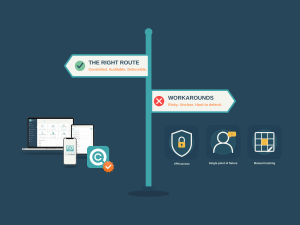
When a legitimate verification portal is inaccessible locally, it is understandable that staff might look for a workaround. That could include using a VPN or another method of accessing a geographically restricted service.
Using a VPN is not, in itself, illegal or non-compliant. But deliberately circumventing restrictions imposed by a third-party system can introduce questions that go beyond whether the qualification itself is genuine.
What are the portal’s terms of use? Why has access been restricted? Is applicant information being handled appropriately? Is the method consistent with the university’s own information-security policies? And, if the verification is subsequently scrutinised, can the university clearly explain and evidence how it was obtained?
The objective should not simply be to obtain an answer. It should be to obtain that answer through a controlled process that the institution is comfortable standing behind.
International verification requires more than access to a website
Geo-restricted portals are one example of a much broader challenge. Primary Source Verification means confirming a qualification with the organisation that issued it. But there is no single global verification system. Processes differ by country, institution and qualification type. Some verification routes are digital, while others require direct engagement with an institution. Sources can also change the way they provide information over time.
Delivering verification consistently requires more than access to a database. It requires knowledge of the appropriate route to the source and the operational capability to follow it.
Why local capability matters
India provides a useful example. It is one of the world’s largest and most complex education systems, with qualifications issued by a huge range of universities, boards and other awarding bodies. The mechanisms available for verification can vary considerably between them.
For an international admissions team, navigating those different routes can require substantial time and specialist knowledge, particularly where an online source is unavailable or cannot be accessed internationally.
Qualification Check’s verification operation is designed to establish the appropriate route to the primary source and obtain confirmation through that route. Where local knowledge or capability is required, our international teams form part of that process.
The university receives the outcome of a structured verification process, together with the evidence required to support it, without having to solve each individual access challenge itself.
Verification should be repeatable, not improvised
There is also a wider governance point. International admissions teams process significant numbers of applications, often under considerable time pressure. A verification model that depends on individual members of staff discovering their own ways around access problems is difficult to standardise and scale.
One member of staff may know how to access a particular source. Another may use a different route. Knowledge can disappear when people change roles, and processes that worked during one admissions cycle may no longer work during the next.
A robust verification process should not depend on individual ingenuity. It should be repeatable, documented and auditable, with a clear record of how the result was established.
Universities shouldn’t need to build global verification infrastructure
The real question, therefore, is bigger than whether a university should use a VPN to access a particular portal. It is whether universities should be taking responsibility for maintaining all of the processes, access routes and specialist knowledge required to verify qualifications across the world in the first place.
For most institutions, there is little value in recreating that infrastructure internally.
Outsourcing Primary Source Verification allows admissions and compliance teams to focus on the decision they need to make, rather than the mechanics of obtaining the underlying evidence. It reduces internal complexity, provides greater consistency and means difficult cases do not have to result in improvised solutions simply because the obvious verification route is unavailable.
Access is part of verification
A process is only truly robust if it works when verification is difficult as well as when it is easy. For universities recruiting globally, that means having a reliable route to primary sources around the world, without expecting individual admissions staff to navigate every technical, geographic and operational barrier themselves.

Recent Articles

Ghent shares admissions verification lessons at Belgian university roundtable

The cost of doing nothing: what is qualification verification worth to your university?

Rising student visa refusals raise the stakes for pre-CAS verification
The Hidden Complexity of Verifying International Qualifications

Student Finance Fraud: Why Universities Need to Verify More Than Qualifications